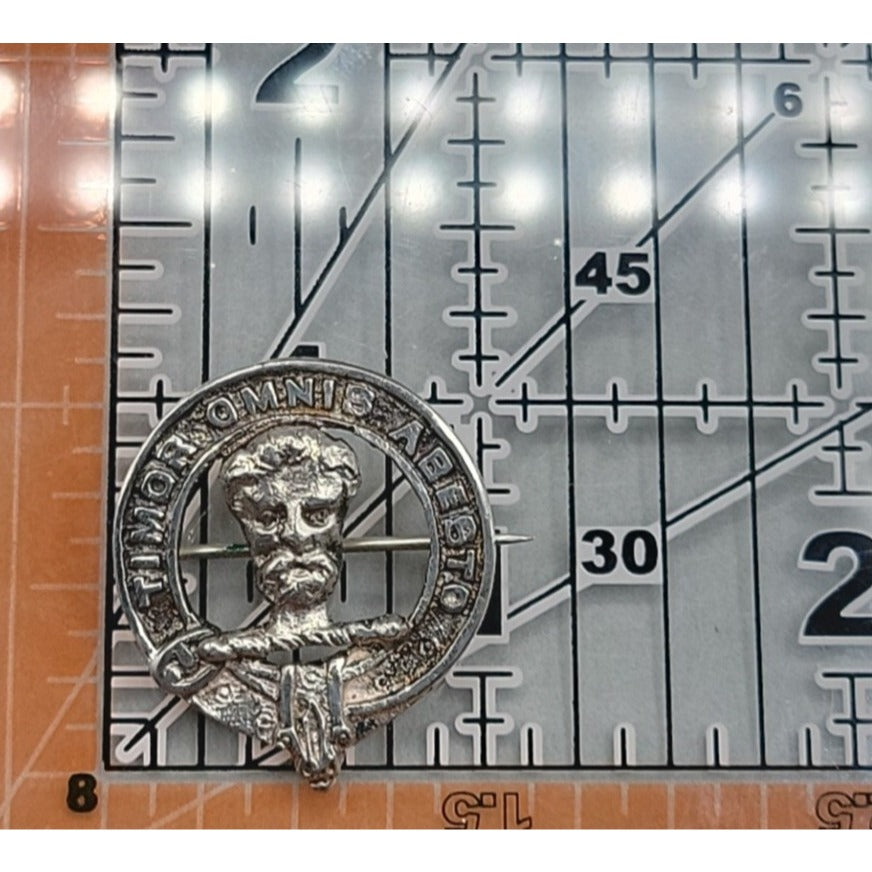
Antique MacNab Scottish Clan Bonnet Badge Kilt Pin 925 Silver 1850s Victorian
Antique MacNab Scottish Clan Bonnet Badge Kilt Pin 925 Silver 1850s Victorian
Couldn't load pickup availability
Rare Find
The Clan Badge MacNab is a distinguished symbol of Scottish heritage, displaying the crest of the Clan Chief as a mark of loyalty and identity.
The Latin phrase inscribed on the strap and buckle, "TIMOR OMNIS ABESTO," is the clan's official motto. It translates to "Let fear be far from all" or "Let all fear be absent". This motto reflects the clan’s historical reputation for bravery and their commitment to facing fear with courage.
Symbolism of the Crest:
The central figure is described heraldically as a "savage's head affrontée". This specific imagery has a gruesome origin story tied to a 1612 feud: it is said to represent the head of the rival MacNeish clan chief, whom the MacNabs defeated and beheaded
Historically, such badges were worn in battle on a Chief’s helmet, allowing followers to recognise their leader amid the chaos. The crest, taken from the Chief’s full coat of arms and enclosed within the traditional Strap and Buckle Garter, signifies allegiance to Clan MacNab. The right to wear or display this badge extends not only to those bearing the MacNab name, but also to recognised Septs descended through the female line.
A timeless and meaningful accessory, this clan badge is ideal for caps, bonnets, or display, celebrating the proud traditions of Clan MacNab.
Antique sterling silver clan badges with these original antique attachment fittings are sought after by collectors of Scottish militaria and jewelry.
While many modern badges are made of pewter or silver-plated base metal, a solid silver badge with antique hardware is a more premium and collectible item.
In the world of antique Scottish jewelry, a plain "SILVER" or "STERLING" stamp instead of a full set of official hallmarks usually means one of two things:
Weight Exemption: Historically, very small silver items (typically under 7.78 grams) were not legally required to go through the full, costly assaying process in Edinburgh or Glasgow. Makers like the famous Ward Brothers often just stamped these smaller pieces with "SILVER" or "STERLING".
Provincial Making: Some silversmiths working in smaller Scottish towns (provincial makers) occasionally used their own simple stamps rather than traveling to a major city for official hallmarking to avoid paying the silver duty tax.
The combination of that specific stamp and the C-clasp strongly suggests your badge was made in the late 19th century or the very early 20th century (roughly 1880–1910). By the 1920s, "safety" clasps with a rotating lock began to replace the simple "C" hook.
In the 19th century, Scottish clan badges were functional as well as symbolic. They were worn on heavy, thick fabrics like wool kilt hose or a fly plaid draped over the shoulder.
Very few of these badges will you run across that are from the error with the markings & the pin setting to date it into Victorian Times. Most are not even silver, this is a piece of history that is not come across everyday.
Share